
Scott County Criminal History Checks
No single search produces a complete Scott County criminal history. Missouri Case.net is the best first stop for a filed local case. It can show the case number, filing date, court, charges, docket events, hearings, disposition, and financial entries. Yet it is a court index, not a jail roster or police report library. A booking may exist before the prosecutor files anything, and a police narrative may remain with the agency even after a court case closes.
Use full legal names and known spelling variants. A date of birth can help separate similar names in an official portal, but sensitive identifiers belong only in secure government systems. Work from the most precise key available. Scott County’s Circuit Clerk asks for a case number in calls, correspondence, payments, and mailed filings, so save that number as soon as Case.net returns the right case.
- Search Missouri Case.net by case number or litigant, then narrow the court to Scott County and the case type to criminal, traffic, or municipal.
- Call the Scott County Sheriff when the question is current custody or a county booking. No official online county jail roster was found.
- Ask the arresting agency for its incident or arrest report. City police records remain with the city that made them.
- Use MACHS when a statewide open Missouri criminal-history response is needed. Treat a name result as a possible match.
- Request the underlying court file or booking sheet from the office that holds it when an index entry does not answer the question.
Scott County Criminal Record Offices
Two Benton addresses can trip up a record request. The historic county courthouse is at 131 South Winchester Street. The Circuit Clerk now states that court business is handled at the Scott County Justice Center, 131 South New Madrid Street. The newer notice controls for filed case records, record-request forms, sound-recording requests, court payments, and bonds during business hours. Call before a visit if an older directory or saved paperwork points to South Winchester.
The official Scott County government page shows the county’s public gateway. The captured page below helps identify that official source rather than a commercial directory.
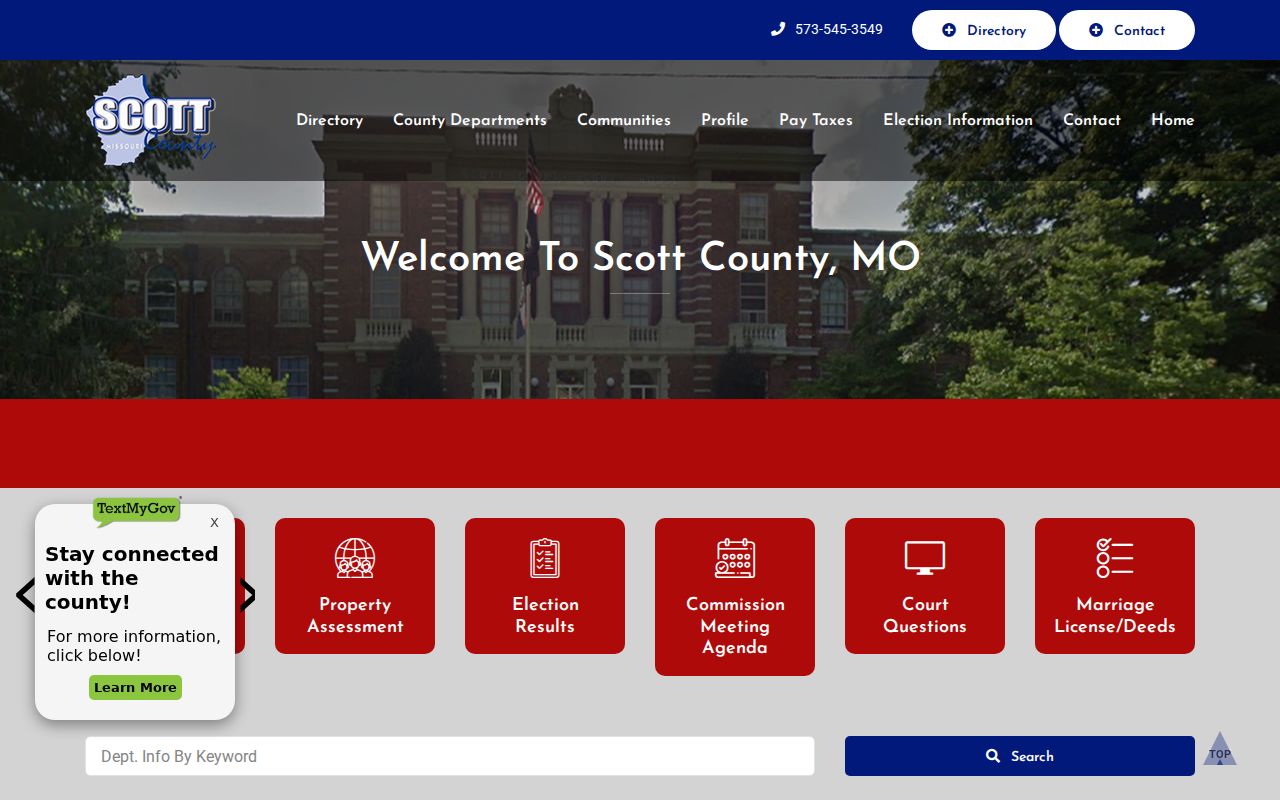
From that county gateway, confirm which office created the desired record. The clerk holds the judicial file, the sheriff holds county law-enforcement and booking material, and the prosecuting attorney handles state and county charging work.
The Scott County office directory supplies the published contacts for those offices.
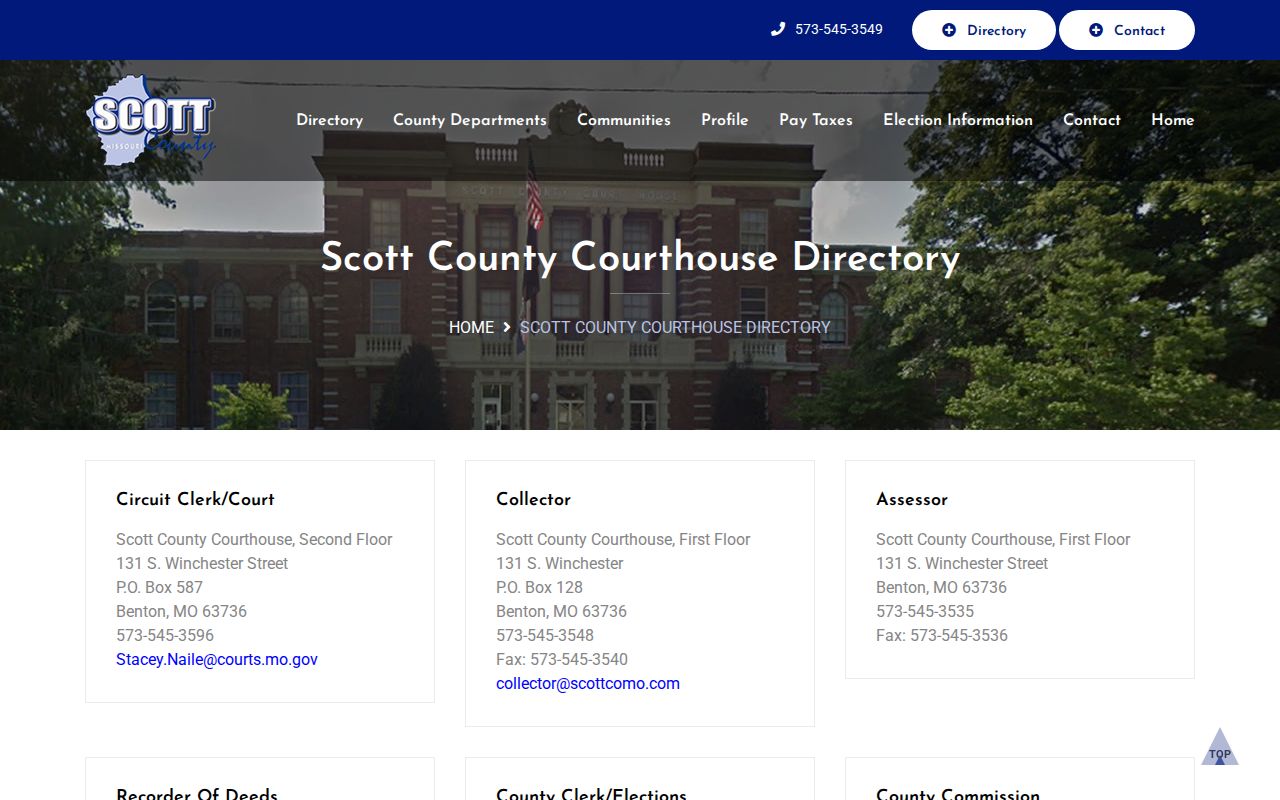
Because the directory and clerk move notice are not fully aligned, verify the destination before traveling. The Circuit Clerk is reached at 573-545-3596. The Sheriff is at 131 South New Madrid Street and can be reached at 573-545-3525 or 573-471-3530.
Official Background Checks in Missouri
The Missouri State Highway Patrol Criminal Justice Information Services Division is the state central repository. Its Missouri Automated Criminal History Site, known as MACHS, offers a public name search for open Missouri criminal-history information. The $15 request has an added electronic convenience fee. A notarized response adds $5. The result can include convictions, arrests less than 30 days old, charges filed by a prosecutor that await final disposition, and a suspended imposition of sentence while probation remains active.
A MACHS name result is a possible match. It relies on personal identifiers rather than fingerprints. For identity-based review, the MACHS Fingerprint Search Portal schedules IDEMIA/IdentoGO capture. The current published components include a $20 Missouri search and a $12 vendor charge. Authorized FBI products have separate charges and legal eligibility rules. MSHP reports a typical seven-to-ten-business-day completion period, but the capture site and price should be checked when scheduling at 844-543-9712.
The official MACHS landing page separates the name and fingerprint routes.
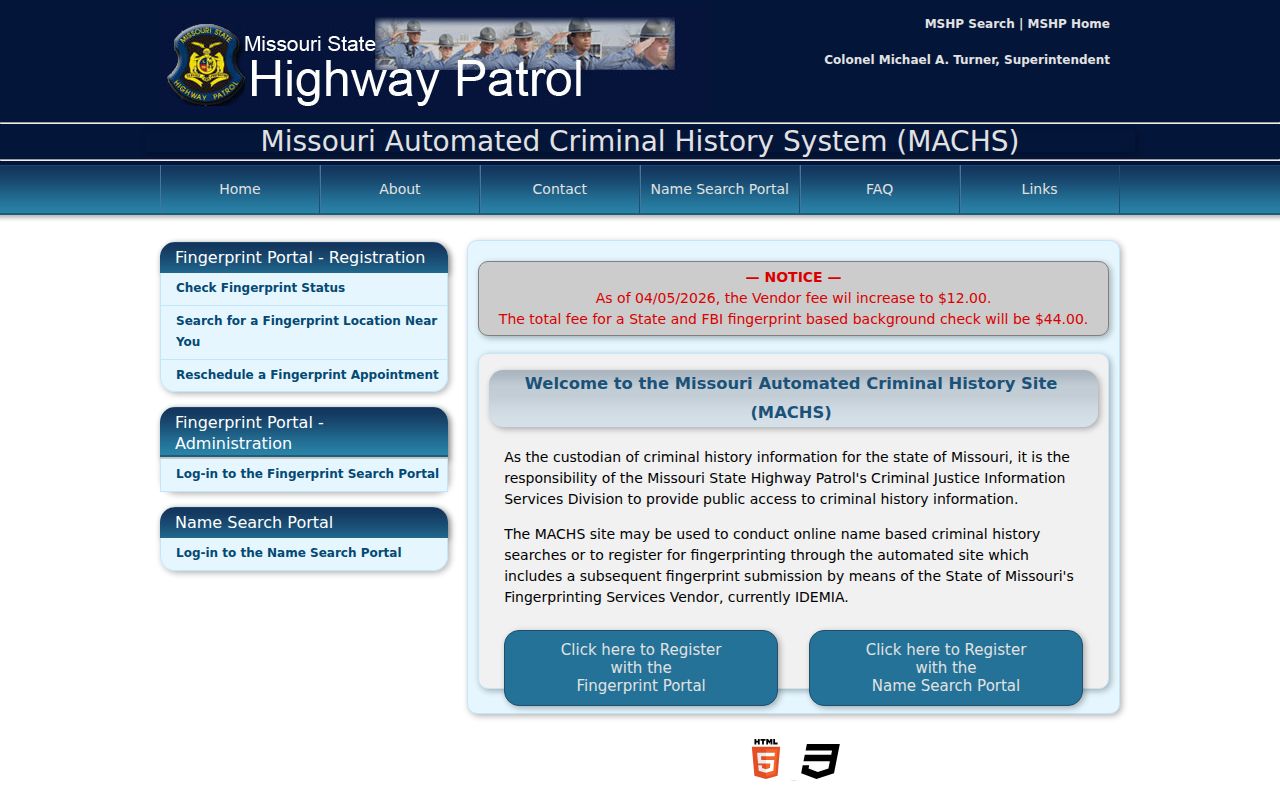
That split matters. Choose the name route for an open-record possible match and the fingerprint route when identity certainty is central.
| MACHS route | Published charge | Best use |
|---|---|---|
| Name search | $15 plus convenience fee | Open Missouri records based on identifiers |
| Missouri fingerprint search | $20 | Identity-based state response |
| IDEMIA capture | $12 | Electronic fingerprint collection and transmission |
| Notarized letter | $5 | Optional notarized response |
Scott County Case.net Search Timing
Scott County is part of Missouri’s 33rd Judicial Circuit. The clerk says a local 33rd Circuit search can show an entry in real time after staff enter it. An all-circuits search may lag by as much as three hours. That does not mean every new matter reaches the docket at once. The clerk also asks for three to five business days to process court dockets. A blank search made just after an arrest is not final proof that no case will be filed.
Search by case number whenever possible. For a name search, narrow by Scott County, filing year, and case type. Open the detail page and inspect each count instead of relying on the result-list label. Track This Case can send alerts after the user selects the feet-shaped icon, supplies an email address, chooses alert options, and enters the verification code. Those alerts are useful, but the clerk says they are not official notice.
| Case.net control | How it helps | Limit |
|---|---|---|
| Case Number | Finds the most precise local file | Must be copied exactly |
| Litigant Name | Finds cases when no number is known | Can return unrelated people |
| Court or County | Narrows results to Scott County | Sikeston may require another county |
| Case Type | Separates criminal, traffic, and municipal records | One event can create more than one record type |
| Track This Case | Sends selected email or text alerts | Not official court notice |
Kinds of Criminal Records
Scott County agencies create separate records as an event moves from report to custody and then to court. The incident report describes what was reported and the agency’s investigative work. An arrest report records the legal custody event. The jail creates a booking file at intake, while the prosecutor creates or files a charging instrument and the clerk maintains the resulting docket and case file. MSHP CJIS later links reported arrest and disposition data in the central repository.
The correct source depends on the stage being checked. The county jail answers who is held locally. Case.net answers what has been filed in court. MACHS assembles open Missouri history reported to the repository. MODOC covers state incarceration and community supervision. The registry covers a specific registration duty, not a person’s whole criminal history.
- Incident and arrest reports: Request them from the sheriff, Sikeston Department of Public Safety, Scott City Police, or Chaffee Police, based on the creating agency.
- Booking records: Ask the Scott County Sheriff for custody confirmation and an open booking sheet or log.
- Criminal case files: Search Case.net, then request eligible filings or audio from the Circuit Clerk.
- Repository history: Use MACHS for the state’s open name product or an authorized fingerprint route.
- Corrections and registry data: Use MODOC Offender Search or the Missouri Sex Offender Registry for those narrow purposes.
Scott County Criminal History Match Limits
A name, birth date, and other identifiers can point MACHS toward a likely person, but they cannot provide the identity certainty of fingerprints. Common names, spelling changes, aliases, and incorrect birth data can produce a wrong or incomplete possible match. If a response seems to belong to someone else, MSHP’s SHP-186 identity-challenge process uses fingerprints to address identity. A disagreement with a correct court outcome takes a different route: start with the arresting agency or court that supplied the source data, obtain a correction there, and ask CJIS how it connects to the repository cycle.
The MSHP fingerprint FAQ explains scheduling, charges, and the vendor’s role.
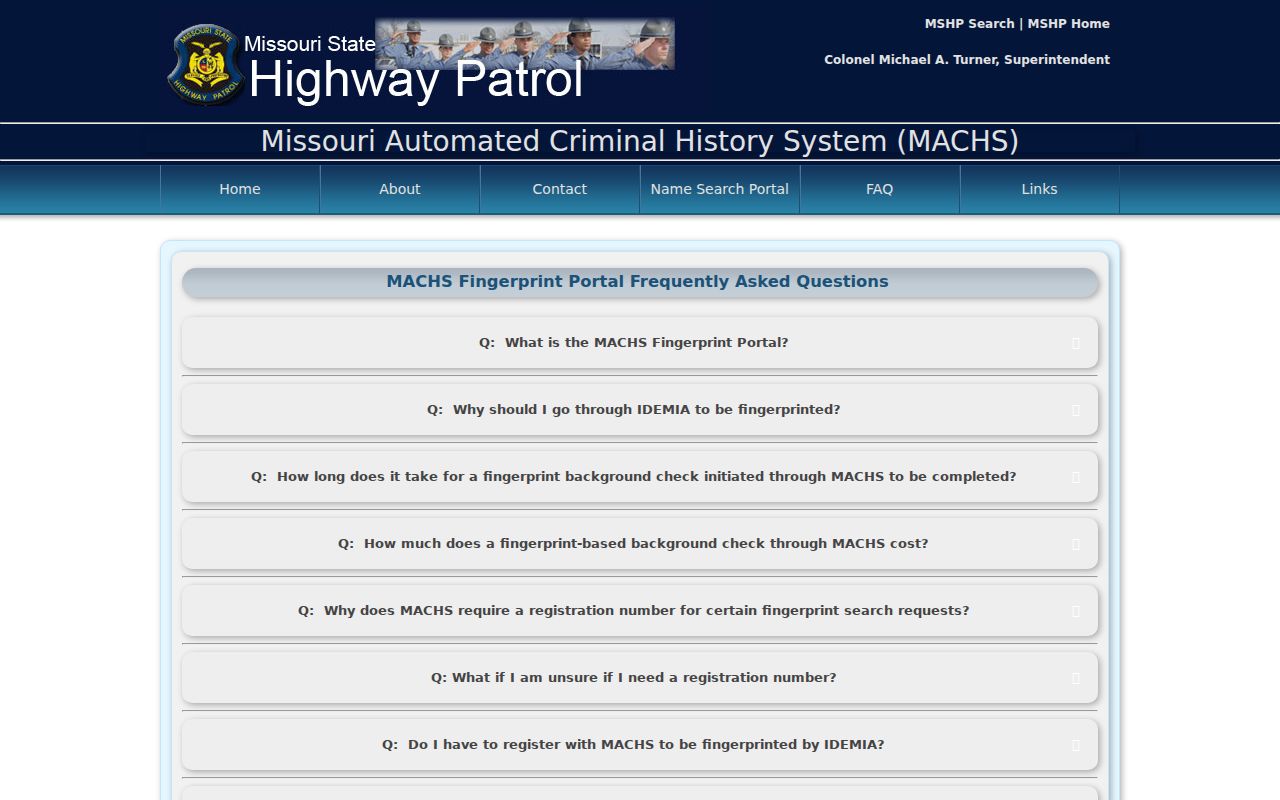
IDEMIA captures and sends the prints but does not receive the criminal-history result. Keep the portal order or registration details and follow MSHP instructions for delivery.
For a person reviewing their own national federal record, the FBI electronic Identity History Summary portal is a separate channel.
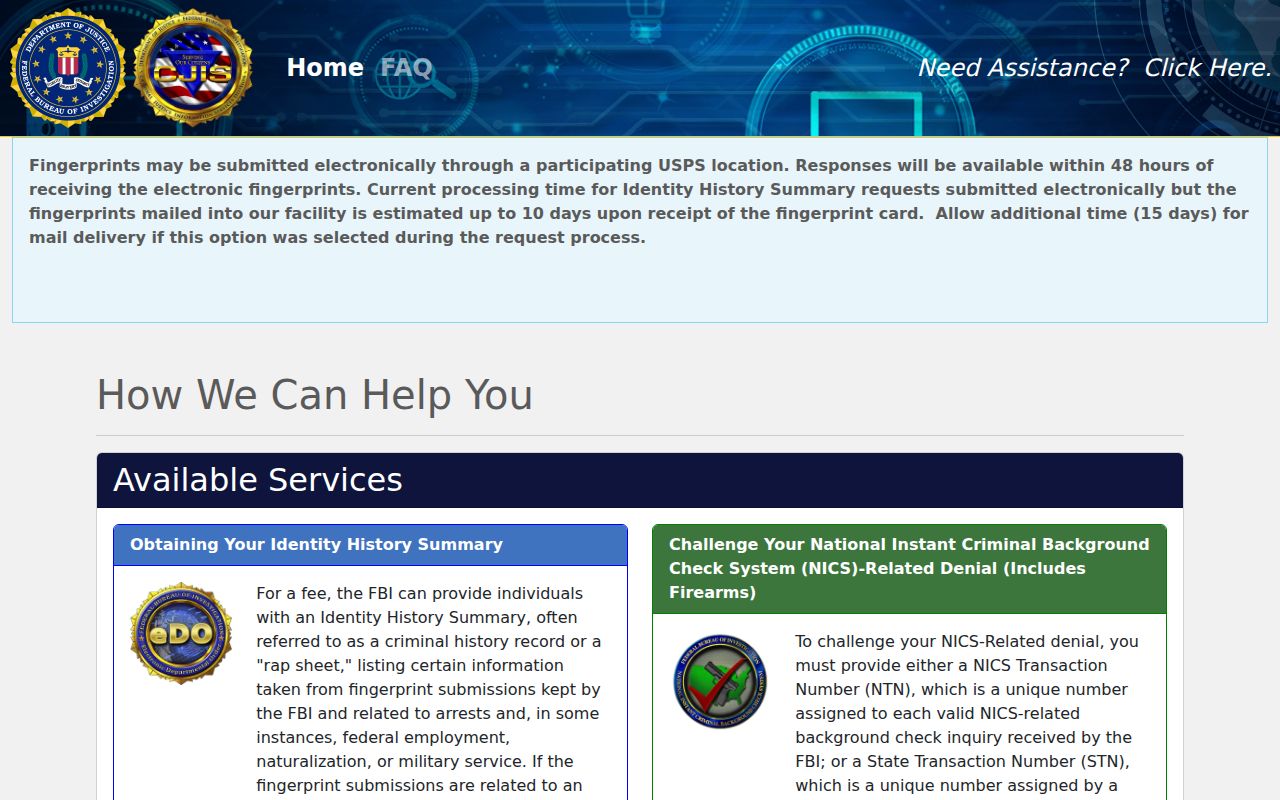
An FBI summary does not replace the Scott County court file. It answers a national identity-history question, while the local clerk can supply the filed docket and eligible source documents.
Scott County Criminal Records: What They Contain
A repository record is built around identity and event cycles. It can connect a name or alias, birth information, state or FBI number, fingerprints, arrest date and agency, charges, court action, disposition, sentence, and supervision or release. A Scott County court file is narrower and deeper. It follows one case through pleadings, orders, hearings, judgment, sentence, costs, and later docket events. A booking entry focuses on a single intake.
Read fields in context. A charge is an allegation. A disposition is the result of a count. “Pending” is not guilt, and a dismissal of one count does not describe the result of every other count. Missouri’s SIS means suspended imposition of sentence. It is not the same as a dismissal, and open MACHS data may display it while probation is active.
| Name and identifiers | Names, aliases, birth data, and agency identification numbers used to associate records. |
|---|---|
| Arrest and booking data | Arrest date, agency, intake time, booking number, charge, bond, and release information when open. |
| Charges and statutes | Each alleged offense, Missouri charge code or statute, and felony, misdemeanor, traffic, or ordinance level. |
| Disposition | The outcome of each count, such as conviction, acquittal, dismissal, or nolle prosequi. |
| Sentence | Custody, probation, restitution, costs, or other terms ordered after a qualifying judgment. |
| Custody or supervision | County detention, MODOC location, probation, parole, or release status held by the responsible office. |
Scott County Jail Record Fallback
Scott County did not publish an inspectable official jail roster or booking blotter during research. Do not treat an unofficial arrest gallery as a substitute. Call the Sheriff at 573-545-3525 or 573-471-3530 and ask whether the person is currently booked. Be ready with the correctly spelled full name and date of birth if staff request it through an appropriate channel. A released person will not be found by a current-custody check, so follow with Case.net and a precise booking-record request.
A Missouri Sunshine Law request can ask the Sheriff for an incident report, arrest report, booking sheet, jail log, photograph, or related open material. Describe the event with an incident or booking number, date, location, agency, record type, and preferred format. Ask for segregable open portions if active-investigation, victim, juvenile, medical, or security information must be withheld. The sheriff’s site does not publish a complete report fee schedule, dedicated portal, or separate records-unit hours, so confirm cost and delivery before placing the order.
For the full arrest-to-court sequence, the county’s Scott County arrest search explains how to join sheriff, agency, Case.net, MACHS, and MODOC results.
Missouri Public Access Laws
Public access depends on the record and its custodian. The Missouri Sunshine Law governs many local government records, while court access also follows Missouri Judiciary rules. A public Case.net docket does not make every filing downloadable. Protected victim information, confidential filings, juvenile records, sealed matters, and nonpublic investigative material may be withheld or redacted. Ask the office for the open portion and the authority for a denial.
Key Missouri authorities:
Chapter 610 RSMo sets Missouri’s open-government framework and exceptions.
Section 610.100 RSMo defines incident and arrest records and controls when parts are open or closed.
Section 43.506 RSMo governs criminal-history reporting to the state central repository.
Court Operating Rule 2 governs public access to Missouri court records with related remote-access and redaction rules.
Section 610.140 RSMo provides the general petition route for qualifying expungement.
Scott County Criminal History Supervision
County custody and state corrections are separate. The Scott County jail holds local and pretrial detainees. After a person enters state custody, or when the question concerns state probation or parole, use the Missouri Department of Corrections. Its Offender Search supports a name or DOC-number search. The result can show custody or supervision status, offense coding, county, sentence dates, location, and release or parole information, but MODOC warns that online status may not be current.
The Missouri Department of Corrections website is the official gateway for prison and community-supervision information.
Use that state channel only after separating a county booking from a state sentence or supervision term.
MODOC also describes its nightly Sunshine data file, which covers incarcerated and field-supervised people and includes data reaching back to 1974.
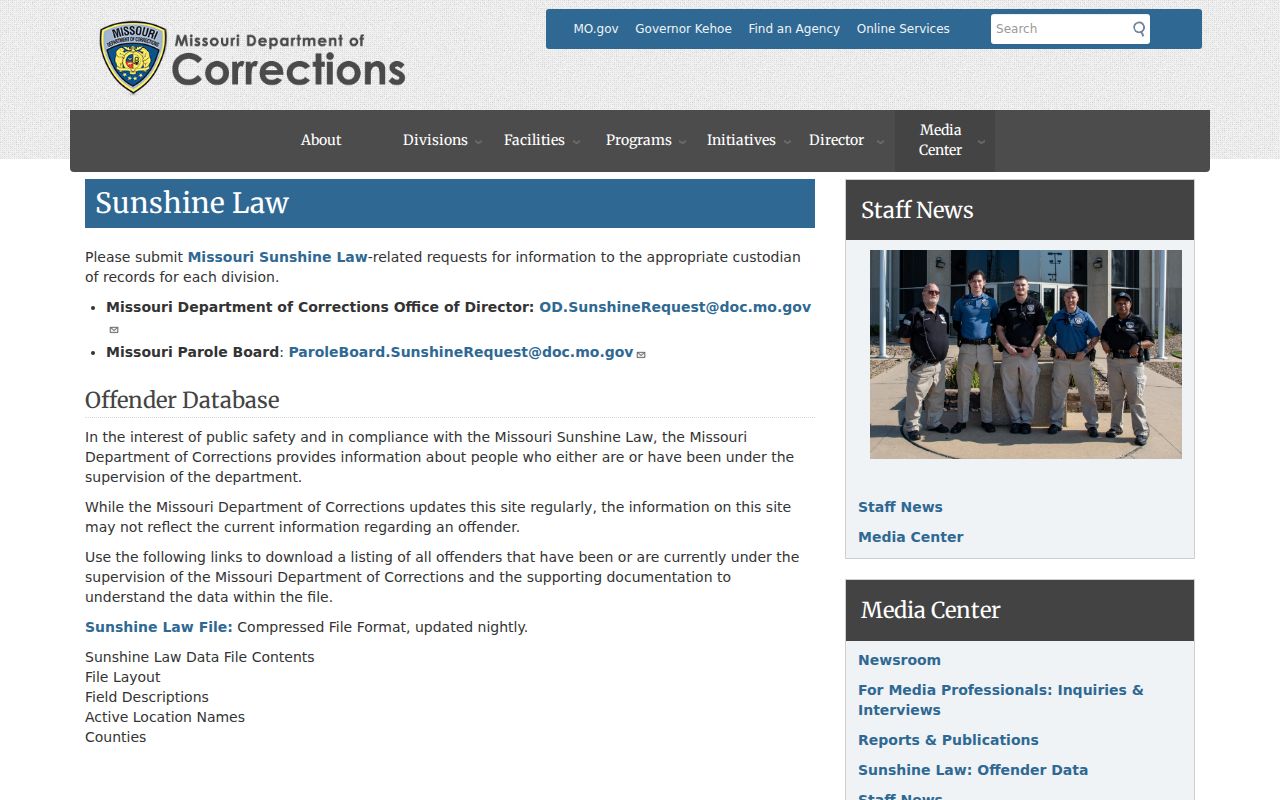
Historical conversions and self-reported fields can affect that file, so confirm a live status with the institution or assigned field office.
The Division of Probation and Parole page explains the state-run supervision structure and its rulebooks.
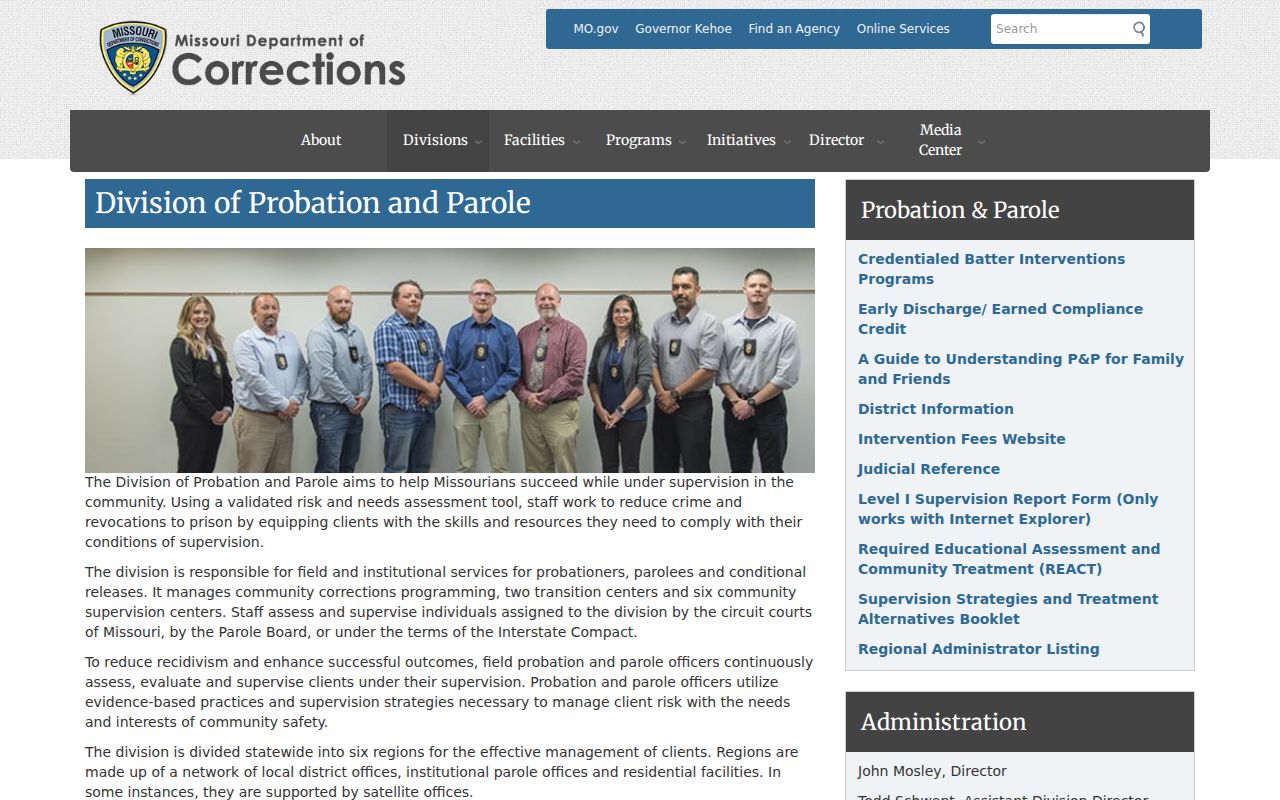
Scott County’s clerk lists the Sikeston Probation and Parole office at 573-472-5353. Case plans, violation reports, and treatment details may remain restricted even when a broad supervision status is public.
Restricted, Sealed & Expunged Records
Missouri expungement closes qualifying records under sections 610.140 and 610.120 rather than pretending no controlled record exists. The current version of section 610.140 took effect January 1, 2025. Eligibility depends on the offense, completed disposition or sentence, probation or parole, pending charges, intervening convictions, restitution, and the statutory public-welfare findings. Class A felonies, dangerous felonies, registration offenses, and many listed violent or sexual offenses are excluded. Check the current statute instead of relying on an old waiting-period summary.
File in the Missouri municipal, associate circuit, or circuit court where the charge or finding occurred. For Scott County circuit or associate cases, begin with the Circuit Clerk at the Justice Center. Use the Missouri Judiciary forms and identify each case, arresting agency, prosecutor, central repository, and other known record holder. The court gives agencies notice, considers objections, applies the required findings, and distributes an order when relief is granted.
Juvenile, victim-sensitive, confidential, and sealed records follow separate access limits. Their absence from a public search does not prove that an event never occurred. A person checking their own corrected record should recheck Case.net, obtain the appropriate MACHS or fingerprint response, and contact any originating source that still displays an inaccurate open entry.
Scott County Expungement Since 2025
The 2025 change makes current source text important. Archived pages can still surface old twenty-year and ten-year summaries that do not reflect the law now in force. Start with the current Revisor statute and the statewide court form. Scott County publishes no guaranteed processing time, and the exact local filing fee was not extracted from the current fee PDF. Ask the clerk for the current filing amount, service and copy requirements, and any in-forma-pauperis process before filing.
Expungement is also different from a pardon. MODOC explains that a full pardon can restore citizenship rights and remove punitive collateral consequences, but it does not itself remove the conviction from the record. Separate Missouri provisions govern certain arrest-record relief. The right route depends on what record exists, how the case ended, and which office still maintains it.
Federal cases use another system. Scott County lies in the Eastern District of Missouri. The official PACER portal holds federal dockets that do not appear as complete cases in Missouri Case.net.
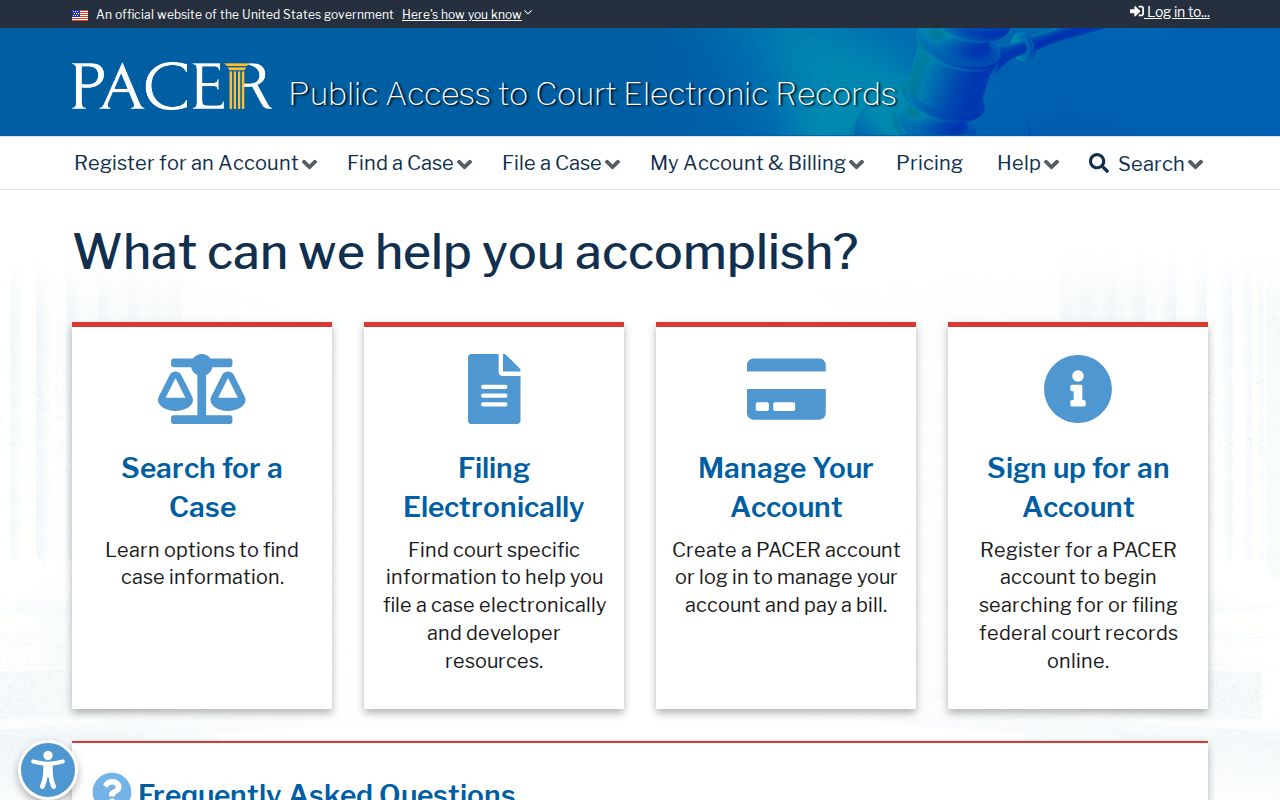
PACER requires registration and applies its current federal fee schedule. It should not be confused with the FBI self-review portal or the Bureau of Prisons locator.
City-by-City Criminal Records in Scott County
City agencies add a local layer to Scott County criminal records. Sikeston Department of Public Safety, Scott City Police, and Chaffee Police create their own incident and arrest reports. Municipal divisions handle city ordinance cases, while state charges move through the correct county court. Start with the event location and arresting agency, then identify the jail and court that received the record.
Sikeston Record Check
16,291 residents in the 2020 citywide count. The city crosses Scott and New Madrid Counties, so venue must be checked.
Scott City Record Check
4,346 residents in 2020. Police and courtroom share 618 Main Street, while the court clerk works at 215 Chester Avenue.
Chaffee Record Check
2,955 residents in 2020. All Chaffee Municipal Court sessions now take place at the Scott County Justice Center in Benton.
Sikeston Criminal Records Cross Counties
Sikeston is Scott County’s largest city, but part of it lies in New Madrid County. A citywide name search can therefore mix jurisdictions. Identify where the event occurred, which agency made the arrest, which jail accepted custody, and which municipal or circuit division holds the case. A Scott County Sheriff search will not answer for a booking routed to New Madrid County.
Scott City and Chaffee present different local traps. Scott City’s police station and courtroom are at 618 Main Street, but its clerk office is at 215 Chester Avenue. Chaffee’s municipal court sessions have moved out of the city to the Scott County Justice Center. Old citation paperwork may list a stale venue, so confirm the case number and hearing location through Case.net or the appropriate clerk.
These local paths eventually connect to the same broad state systems. Fingerprint-supported arrests and later dispositions should flow to MSHP CJIS, while state incarceration or supervision reaches MODOC. Reporting delay, a municipal venue, unmatched identifiers, or a confidential record can still make two official searches look different.