
Sikeston Criminal History Checks
A Sikeston record search works best as a chain, not a single name query. First identify whether the event occurred in the Scott County or New Madrid County part of Sikeston. Next identify Sikeston Department of Public Safety as the report source, if its officers handled the event. A city report, a jail booking, a municipal docket, and a statewide history answer different questions. Finding one does not prove that the others exist.
Use exact identifiers before broad name searches. An incident number leads to a police report. A citation or case number points to the court docket. A booking date helps a sheriff locate custody material. For a statewide open-record response, the Missouri State Highway Patrol uses personal identifiers through MACHS, but a name result is only a possible match.
- Confirm the Sikeston event address, arresting agency, and county side of the city.
- Ask Sikeston DPS for the incident or arrest report by number, date, location, and report type.
- Search Missouri Case.net with the citation or case number and the correct municipal or county filter.
- Call the appropriate county sheriff to confirm custody and request a booking record.
- Use MACHS when a statewide Missouri open criminal-history response is needed.
Why Sikeston Records Cross Counties
Sikeston had 16,291 residents in the 2020 Census baseline and is Scott County's largest city, yet part of Sikeston lies in New Madrid County. That boundary changes where a searcher should look. A Sikeston address alone does not establish the county court, booking site, or prosecutor. The event location and charging agency do.
The official Census place-estimate tables show why citywide totals must not be treated as Scott County-only counts.
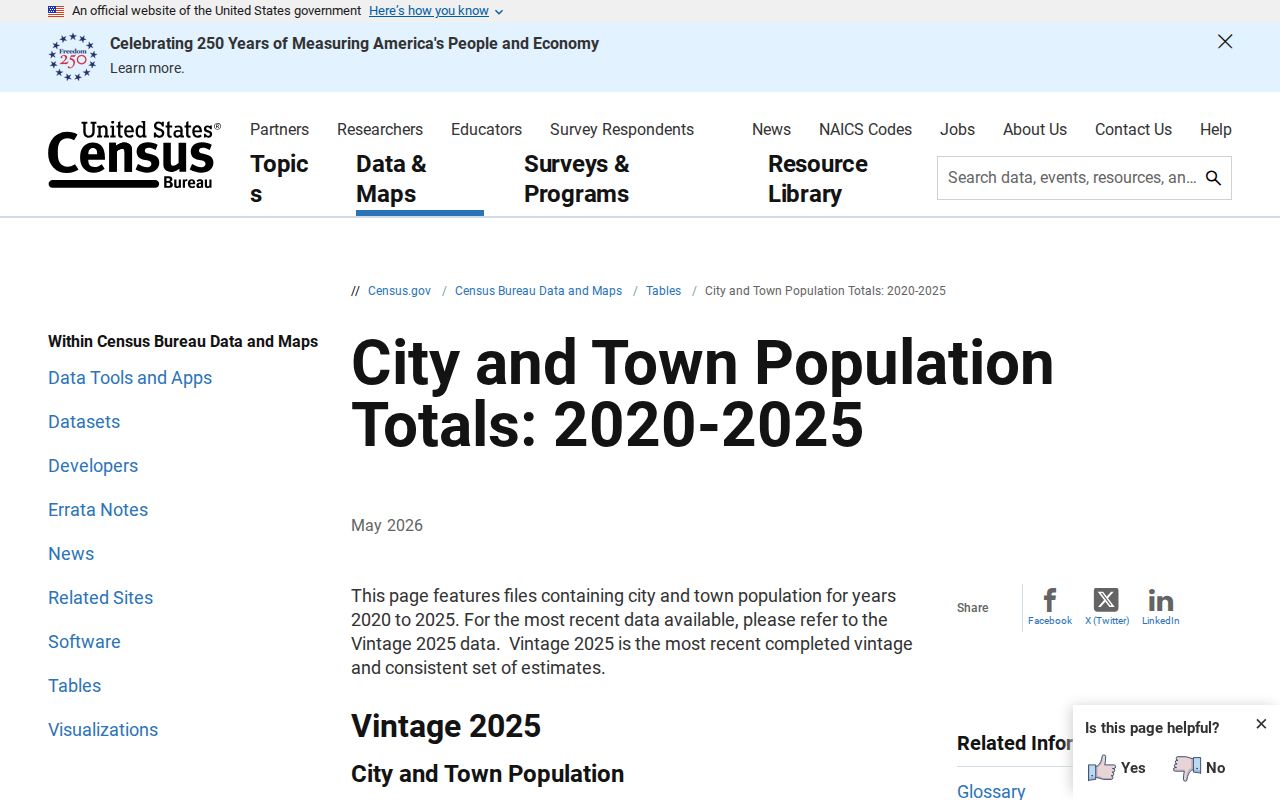
The citywide geographic view is a practical records clue: filter by venue rather than assuming each Sikeston result belongs to Scott County.
When a Scott County search has no result, do not conclude that no Sikeston record exists. Recheck the street location, ask DPS where custody went, and search the correct Case.net division. This is especially important for common names, because a statewide litigant search can mix unrelated cases from both counties and other Missouri courts.
Records at the Sikeston Police Department
The city calls its law-enforcement agency the Sikeston Department of Public Safety. DPS creates the source incident and arrest reports for events its officers handle. No dedicated downloadable request form, complete fee schedule, or public arrest blotter was found in the official city material. A requester should use the city contact route and ask whether the records custodian is DPS or the City Clerk.
The official Sikeston Public Safety page is the proper lead for department information and current contact directions.
The department page anchors the request to the agency that created the city report, rather than to a commercial people-search service.
Describe the record with care. Supply the incident number when known, event date and time, address, type of report, and preferred electronic format. Ask separately for an incident report, arrest report, photographs, crash material, or other media because one request does not automatically include every related item. Tips and emergency-reporting channels are not records-request channels.
Start With a Sikeston Incident Number
An incident number is the best local key for a Sikeston police record. It separates one event from other calls involving the same name or address and helps the custodian find the record without guessing. If the number is missing, give the narrowest date range possible, the exact location, and the responding agency. State whether the request concerns an incident report or an arrest report.
Missouri law may leave basic incident facts open while protecting active investigative material, victim information, juvenile data, medical details, or other closed content. If DPS withholds part of a record, ask for the segregable open portion and the legal basis for the denial. A redacted report can still confirm when and where an event was reported, the general nature of the call, and which Sikeston agency handled it.
Note: A DPS report documents the agency event; it does not establish the final outcome of a Sikeston court charge.
Booking and Arrest Records in Sikeston
Sikeston has no verified public city arrest blotter or published booking policy in the research. Ask DPS which jail accepted custody. A Sikeston arrest may be booked through Scott County or New Madrid County based on location, legal authority, and the facility used. If Scott County received the person, use the official Sheriff page or call 573-545-3525 with the correctly spelled name and likely booking date.
A city arrest report and a county booking sheet are related but distinct. The first records the officer's action and alleged facts. The second logs jail intake, booking and release times, arresting agency, listed charge, bond, and release reason. A prosecutor may later file a different charge or decline to file. For a deeper county custody explanation, use the Scott County Arrest Search.
No result in a current-custody check can mean release or transfer. It does not prove the arrest never occurred. Request the booking file from the sheriff and compare it with the court docket.
Three Sikeston Records From One Arrest
One Sikeston event can create three core public-record trails. The DPS incident or arrest report describes what city officers recorded. The receiving jail's booking record documents custody and release. A municipal or circuit docket shows what was filed and how the case moved. Each trail changes on its own clock, so same-day searches may show an agency record before a court case appears.
| Record | Custodian | Best key |
|---|---|---|
| Incident or arrest report | Sikeston DPS | Incident number and event location |
| Booking record | Receiving county sheriff | Name and booking date |
| Court docket | Municipal division or circuit clerk | Citation or case number |
Compare the records by identifiers and dates, not by name alone. A booking charge is an intake allegation. The court disposition is the judicial outcome. Neither should be read as a substitute for the other.
The Sikeston Municipal Court File
Sikeston Municipal Court handles alleged city ordinance violations. It does not decide general Missouri felony prosecutions. Because Sikeston spans two counties, confirm the division and venue shown on the citation before relying on a broad search. Citation or Case.net case number is the safest search key.
The official Sikeston Municipal Court page supplies current city court information.
The municipal court channel should be checked for city ordinance matters before moving to a circuit court search for state charges.
| Court Name | Sikeston Municipal Court |
|---|---|
| Case Types Heard | City ordinance and eligible municipal matters |
| Case Lookup Channel | Official court contact and Missouri Case.net with the correct division filter |
| What the Docket Shows | Case number, filings, scheduled events, status, and disposition when public |
| Copies & Fees | Confirm current availability and charges with the municipal court |
Case.net Filters for Sikeston Records
Missouri Case.net can search by litigant or case number. For Sikeston, the court and county filters matter as much as the name. Start with the citation or case number. If only a name is known, add the correct court location, case type, filing year, and other non-sensitive details. Open each plausible result and compare filing dates, charges, status, and division.
A docket is an index of judicial events, not the complete DPS report or jail file. It may show the charge, hearings, counsel, disposition, sentence, and financial entries while omitting sealed, juvenile, victim-sensitive, or otherwise restricted documents. Case.net's Track This Case alerts are useful for updates, but they are not official court notice. Do not rely on an unsolicited text demanding payment. The Scott County clerk has warned about fraudulent toll or traffic debt texts.
When a Sikeston municipal result does not appear under the first county searched, verify the venue rather than widening the name search without filters.
How Sikeston Records Reach the County
A Sikeston DPS report stays with the city agency. If an arrest leads to custody, intake data belongs to the receiving jail. If a prosecutor files a charge, the correct municipal or circuit clerk opens a case. Fingerprint-supported arrests and later dispositions are then reported to the Missouri State Highway Patrol Criminal Justice Information Services Division under state reporting law.
Record flow: Sikeston DPS › receiving county sheriff › municipal or county court › Missouri State Highway Patrol CJIS
Recent activity can appear first in city or jail records. A court docket follows filing and clerk entry. MACHS is the statewide open-history layer, but its name search remains a possible-match product. Fingerprints are the identity-based method for reviewing a record tied to the subject. This timing explains why two official Sikeston searches may both be accurate yet show different stages of the same event.
Sikeston Records Beyond City Limits
State channels answer questions that a Sikeston custodian cannot. MACHS returns open Missouri criminal-history information reported to the central repository. Missouri Department of Corrections Offender Search covers state incarceration or community supervision, not a current city or county booking. The Missouri State Public Defender handles its own statewide application and office process when counsel eligibility is at issue.
The Missouri DOC contact page shows the official inquiry paths for state custody and supervision questions.
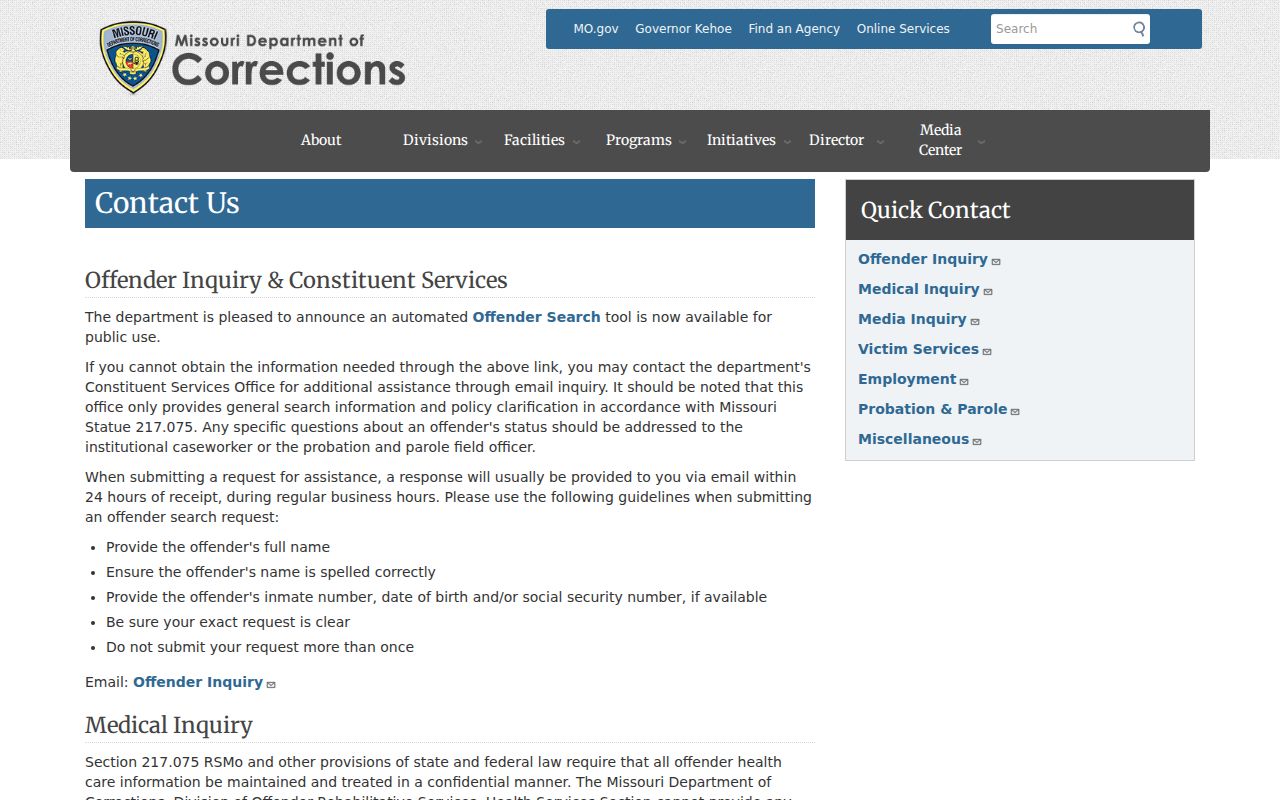
That source is useful only after a Sikeston matter reaches state corrections or supervision; it is not a replacement for DPS, the sheriff, or the city court.
The Missouri State Public Defender publishes the official statewide route for defense-service information.
Its statewide role is separate from the record custodians, which means requests for reports or docket copies still go to the agency or court that holds them.
Sikeston City Cases Versus Felonies
A municipal case alleges a violation of Sikeston ordinances. A state felony or other state-law charge belongs in the proper Missouri court and is prosecuted through the appropriate county channel. The event may begin with the same DPS officer, yet the legal file can develop in a different office. Read the charge source, statute or ordinance, court division, and prosecutor before deciding what kind of record is open.
Municipal and circuit records also use different custodians for copies. Ask the Sikeston court about its own file. Use the correct circuit clerk for a state case. The arresting agency remains the source for its narrative. A dismissal in court does not automatically erase the police or booking record, and an arrest is not proof of guilt.
Note: Court status and custody status are separate; check both when a Sikeston arrest is recent.
Sikeston Record Access Rules
Missouri public-access rules apply to Sikeston agency and court records, but they do not make every document downloadable. The Sunshine Law governs city records and exceptions. Section 610.100 defines arrest and incident records and allows some investigative content to remain closed. Court Operating Rule 2 and judiciary redaction rules govern public court access. State law also requires qualifying criminal-history events to be sent to the central repository.
Key Statutes:
Missouri Sunshine Law, Chapter 610 RSMo sets the state's open-government framework and exceptions.
§610.100 RSMo defines arrest and incident reports and controls open and closed treatment.
§43.506 RSMo governs reporting criminal-history information to the Missouri central repository.
Ask for the open, segregable part when a Sikeston record contains protected material. Juvenile information, victim-sensitive details, active investigative material, sealed cases, and other confidential content may be withheld. A custodian should identify the legal basis for a denial. For self-review, compare the source record with the correct court docket and official state response before seeking a correction.